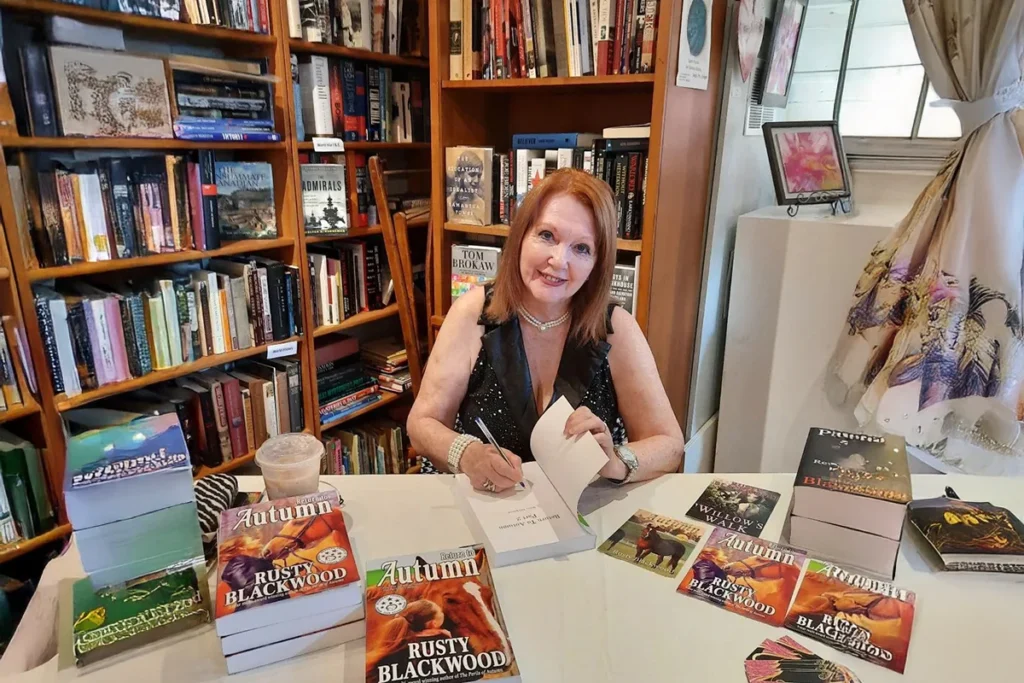





PHOTO: Drew Briney, author and genre-blender extraordinaire, whose layered stories explore the space between justice, myth, and technology.
Imagination Innovation And Moral Complexity
Drew Briney blends technology, magic, and morality in genre-defying fiction. His works explore psionic dragons, post-apocalyptic worlds, and ethical dilemmas, delivering deeply human characters and thought-provoking narratives.
Drew Briney writes with a restless, uncontainable imagination that thrives on shattering genre boundaries and exploring the moral grey spaces where technology and magic collide. His stories push beyond traditional sci-fi and fantasy frameworks, creating worlds infused with psionic dragons, memory-altering assassins, and post-apocalyptic societies shaped by alien wisdom. Yet the heart of his work beats with profound humanity—his characters wrestle not only with danger, but with conscience, identity, and the struggle to remain human in systems designed to erode that very essence.
A former lawyer and scholar of ancient texts, Briney channels his lived reality into ethical dilemmas that feel startlingly authentic. Years in the courtroom stripped away any romantic notions of justice; what he witnessed informs the sharp social realism embedded in his fiction. He recalls interviewing a man who stabbed someone over a cell phone dispute, another who openly welcomed the chance to kill if asked by a mentor, and witnessing wealthy, well-connected individuals manipulate systems while the vulnerable suffered. These experiences shaped Briney’s view that evil often hides behind bureaucracy and privilege—an insight that gives his characters’ battles an ominous urgency. Their struggles aren’t abstract; they are rooted in a world that feels unsettlingly familiar.
Briney captivates readers with imaginative storytelling, moral depth, and unique genre blends, creating unforgettable characters and worlds that challenge traditional fantasy and science fiction.
Briney’s approach to character development is equally rigorous. Influenced by advice from the late David Farland, he reviews each scene from the perspective of every character, whether present or not. This practice transforms even minor figures into emotionally charged presences—passionate allies, reluctant betrayers, or opportunists poised to become antagonists. As he expanded this method, readers increasingly remarked on how immersive his character work felt. For Briney, that emotional resonance is the reward for a process that is both invigorating and deeply enjoyable.
His genre-blending instincts appear vividly in Unproven, where psionically gifted dragons challenge long-standing fantasy tropes. Instead of dragons speaking a common tongue, Briney imagined creatures communicating through images and emotions—an ambiguity that heightens fear, mistrust, and intensity. Their intelligence becomes difficult to measure, their intentions unclear, and their presence more volatile. The effect is a fresh, unnerving twist on a familiar mythic figure.
In Moon 514, Briney merges post-apocalyptic tension with alien magic and advanced genetic engineering to critique human nature and envision alternative futures. He is captivated by transhumanism and the pursuit of biological perfection, seeing both the promise and peril in such advancements. While abuses are inevitable, he also imagines a future where technology enables higher moral development—echoing the optimistic philosophy behind Star Trek. The alien culture in Moon 514 evolved through nature-based magic, blending ecological wisdom with technological sophistication. This fusion forces both characters and readers to reconsider the balance between moral growth and scientific progress.
The origins of Moon 514 itself are tenderly personal—Briney began writing it for his daughter, who was posting stories on Wattpad. Wanting to offer young readers something beyond dystopian despair, he drew inspiration from the hope-driven magic-and-tech fusion that helped Star Wars captivate generations. The result is a narrative that merges survival with possibility, darkness with wonder.
Briney’s dual expertise in historical nonfiction and speculative fiction gives him a unique creative balance. His nonfiction work is driven by a meticulous, almost obsessive devotion to facts—an approach that satisfies one side of his mind. Fiction activates the other side, where philosophical exploration, moral inquiry, and imaginative experimentation take center stage. The contrast keeps his creativity alive; when one genre feels limiting, the other reignites his enthusiasm.
For aspiring authors looking to weave complex themes of technology, magic, and morality, Briney offers practical advice: read widely before writing. Authenticity in blended genres requires a deep understanding of each one, and television adaptations aren’t enough. He recommends studying at least a dozen exemplary works in both fields before attempting a hybrid. But above all, he emphasizes character. If readers fall in love with the people at the heart of the story—whether wielding magic or navigating advanced technology—they will forgive imperfections and follow wherever the narrative leads.
Briney continues to expand his imaginative universes, currently working on Sea Dragon Apocalypse, a high-tech sci-fi–fantasy fusion. With multiple projects in both nonfiction and fiction calling for his attention, he remains driven by a dual commitment: to uncover truth through history and to explore truth through imagination.
Source: Reader’s House Magazine